
WNC Educator’s Exchange · BrainHub – AI Summit 2027
2027 Student AI Innovator Award
DRAFT Award Guidelines – September 2026
$1,000 award for each of three winners
Nominate completed student AI projects from WNC high schools, community colleges, colleges, and universities—any discipline. Showcase at the BrainHub AI Summit, October 1, 2027.
Overview
What this award recognizes
The WNC Educator’s Exchange planning committee invites Western North Carolina’s high schools, community colleges, colleges, and universities to nominate completed student projects for the 2027 Student AI Innovator Award. The award recognizes and celebrates creative, effective, and responsible student use of artificial intelligence (AI)—in any discipline and at any level.
Students are recognized for work they have already done as part of their education. Educators are encouraged to share information about this award with students and to nominate student work. Students may also nominate their own work. Every submission names the student’s school, and both are recognized alongside the students.
Eligibility & scope
Who can enter
- Geographic criteria
Institutions must have a campus in one of the WNC counties listed below.
- Nominees
Individual students or teams of up to five students enrolled at an eligible institution when the work was done. High schools may be public, private, charter, or home-school programs. Students enrolled at more than one institution (e.g., Career & College Promise or early college) are placed in the category of the institution the work was done for. Students under 18 must include a signed parent/guardian consent.
- Nominating educator (optional)
Submissions can identify a faculty member, teacher, advisor, coach, or staff member at the student’s institution who assigned, supervised, or can otherwise verify the work was done for academic or work-based learning credit. The educator may be the nominator or may simply confirm a student’s nomination. There is no limit on nominations per educator or institution.
- Eligible work
Any student project completed between November 15, 2026 and August 31, 2027 in which AI or machine learning played a substantive, documented role—as the subject of the work or as the method used to accomplish it. Work may come from course assignments, capstones, labs, studios, shops, clinicals, research, service-learning, work-based learning, clubs, or a student’s own initiative under an educator’s sponsorship. Work does not need to be related to a computer science or technology course. Students from any discipline are encouraged to participate. Commercial or entrepreneurial projects are eligible if the work meets award guidelines and the evaluation rubric.
Eligible WNC counties (27)
Alleghany · Ashe · Avery · Buncombe · Burke · Caldwell · Catawba · Cherokee · Clay · Cleveland · Gaston · Graham · Haywood · Henderson · Jackson · Lincoln · Macon · Madison · McDowell · Mitchell · Polk · Rutherford · Swain · Transylvania · Watauga · Wilkes · Yancey
Award categories
Three $1,000 awards
One $1,000 award will be presented in each category. If a category receives no submission meeting the award standard, judges may present that award to an outstanding submission from another category.
- $1,000High School Award
- $1,000Education and Community Award
- $1,000Innovation and Creation Award
Evaluation areas
Submissions should demonstrate:
- Potential benefit to a community, employer, institution, education, field of study, or specific population
- Creative, effective use of AI that goes beyond routine applications
- Quality work, with AI output verified and honest reflection on the process
- Responsible, transparent, and ethical use of AI
Important dates
Timeline
- Fall 2026Call for nominations opens; educators plan activities around the award
- November 15, 2026 – August 31, 2027Eligible work window; submissions accepted on a rolling basis
- September 1, 2027Submission deadline
- September 24, 2027Winner notification
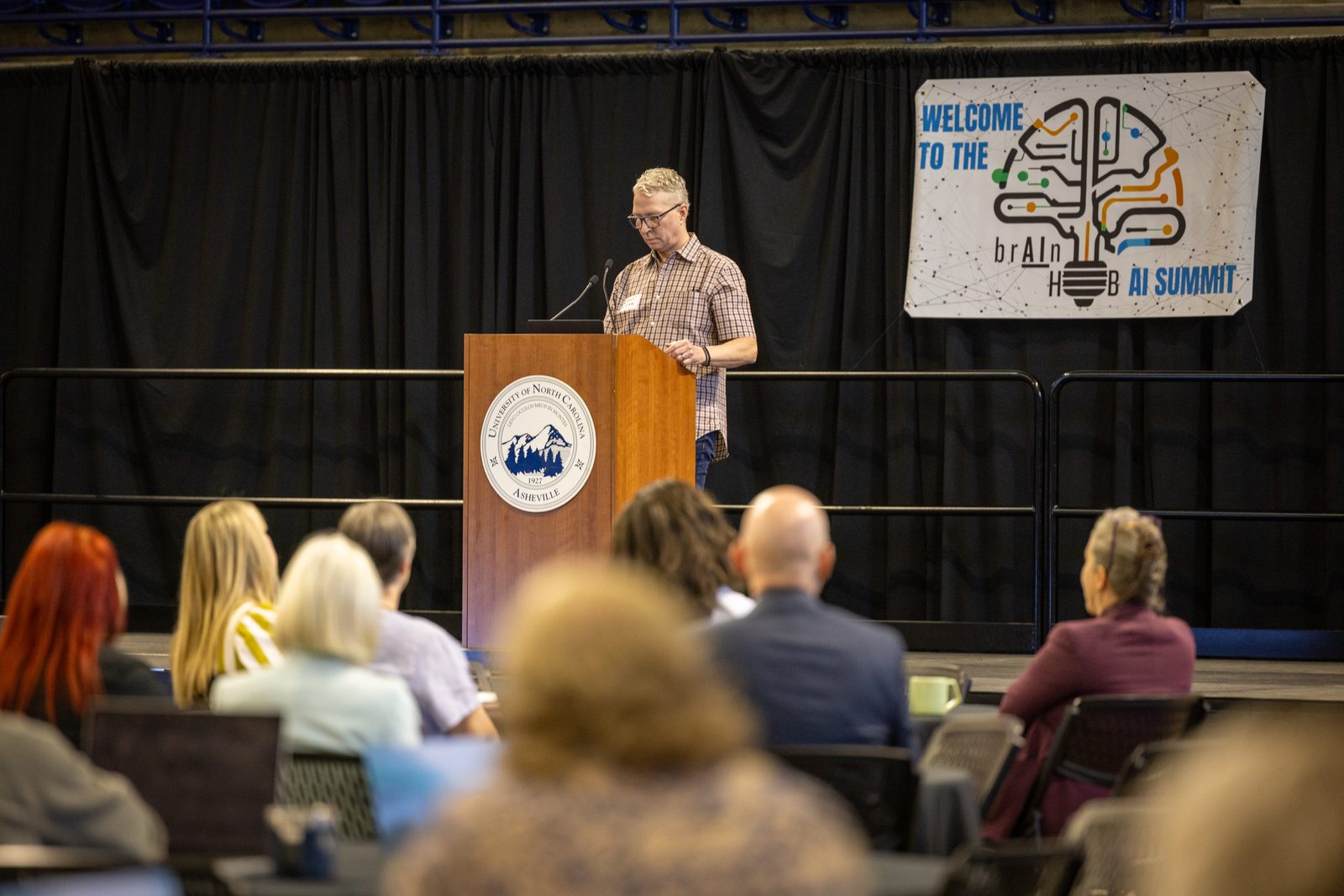
- October 1, 2027Award presentations and student showcase at the BrainHub AI Summit
Submission requirements
What to submit
All nominations must be submitted as a single PDF (maximum 10 pages, 50 MB, 12-point font), using the official submission form. External media (video, poster, slides, website, portfolio) may be included via hyperlinks. Submissions must include:
- Cover page
Title, category, student name(s) and program or grade, institution, sponsoring educator (optional), origin of the work (course, capstone, club, etc.), completion date, and a short abstract.
- Project narrative
Purpose and who benefits; how the work came about; the AI tools used, representative prompts or workflows, and how AI output was tested and corrected; what is creative about the approach; milestones, setbacks, and lessons learned; results and next steps.
- Responsible AI statement
Transparency about AI’s role, human oversight, privacy and data handling, fairness, safety and limitations, and confirmation the AI use was permitted for the work.
- Supporting media
At least one demonstration video (5 minutes max), poster, slide deck, walkthrough, or portfolio, linked within the PDF and accessible at least through October 2027.
- Educator statement (up to one page)
Required when the work responded to an assignment or educator-designed activity; encouraged otherwise. Describe what was assigned, how AI use was framed, and why this work stands out. Judges use it as context for every criterion.
- Signatures
Certification of Originality (each student); Parent/Guardian Consent (students under 18) or Media Release (adult students).
- Presentation
Award recipients must showcase their projects at the 2027 BrainHub Summit. Recipients must either attend and present in person or, if unable to attend, provide a recorded video presentation for showing at the Summit.
Prizes & recognition
What winners receive
Three winners each receive a $1,000 award, the opportunity to present at the BrainHub AI Summit on October 1, 2027, and regional recognition. Winning students, their nominating educator (if applicable), and their institution are named in the Summit program and communications, and any sponsoring educators are invited on stage with their students. Awards to students under 18 are paid according to the school’s policy. Additional strong submissions may be invited to a student showcase.
Evaluation criteria
How submissions are judged
Submissions are judged within their category. Judges calibrate expectations to the students’ educational level; a simple idea executed with care and honest reflection can outscore an ambitious one that is poorly documented.
| Criterion | Weight | What judges look for |
|---|---|---|
| Potential Benefit & Relevance | 30% | Clear, significant benefit to a community, employer, institution, field, or population; evidence the need is real; realistic potential for the work to be used, continued, or adopted; relevance to the WNC region. |
| Creativity & AI Innovation | 30% | Originality of the idea or of the way AI was applied; appropriate choice of tools and methods; evidence the students iterated and went beyond the obvious; sophistication appropriate to their level. |
| Quality of Work & Execution | 25% | Completeness and polish of what was produced; rigor in testing and verifying AI output; persistence through setbacks; clarity of the narrative and media. |
| Responsible AI Use | 10% | Transparency about what AI did and what the students did; human oversight; attention to privacy, fairness, safety, and limitations; compliance with the institution’s expectations for AI use. |
| Educator Involvement | 5% | The submission includes evidence of educator guidance, feedback, collaboration, or an endorsement describing the student’s contribution or learning. |
Contact
Questions & forms
Questions: info@brainhub-contest.org. Guidelines, the educator call for nominations, and required forms: www.brainhubsummit.com.
Introduced at the November 13 Educators’ Exchange by Steven Young · Blue Ridge Community College.
Contact
Questions or follow-up?
Questions about the 2027 Student AI Innovator Award? Email Bill or write info@brainhub-contest.org.
Or write directly to wsederburg@gmail.com